
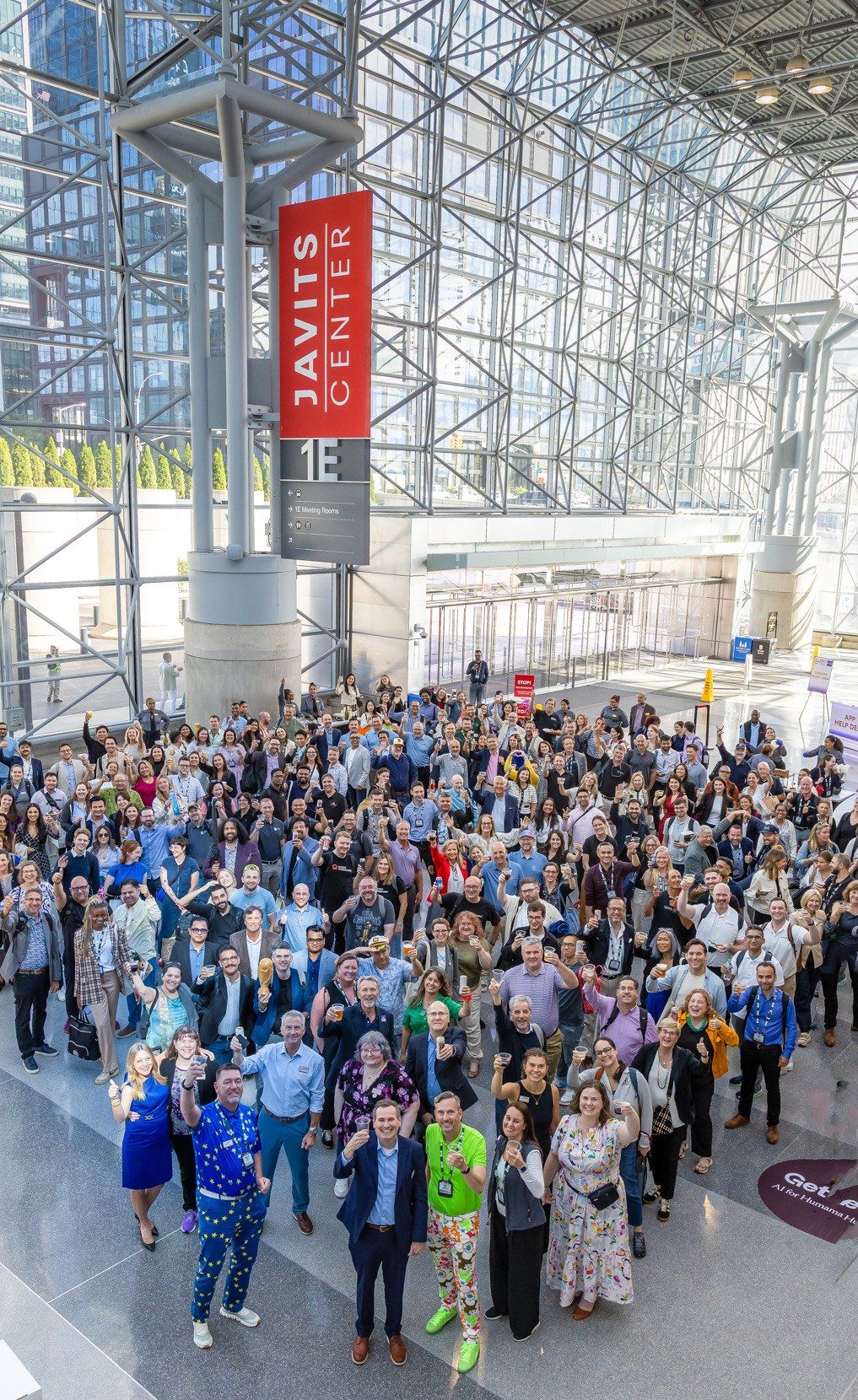
The 2026 Quirks Conference in NYC left no doubt: AI is changing consumer insights workflows and offering new research opportunities - all at light speed. But the loudest signal had nothing to do with the tools — it was about what a human researcher brings that no tool can: context and real-world perspective.
We are excited about the ways that AI can help increase speed, automate processes and offer the potential for new research methodologies. But realizing that potential still depends on timely, fundamental input from the consumers that we are trying to reach.
(As one person said, we still use our brains, but AI gives us the time and energy for the truly important work).
Five core themes from Quirks NYC 2026 that define where the human element is not just surviving, it's becoming the primary source of value.
Truth orchestration: AI excels at finding patterns and rationalizing positivity, but it cannot understand why those patterns exist. As David Rothstein Sr. from RTi Research noted, AI provides information, but it has no accountability and "does not give a damn." Our value lies in our ability to turn AI-generated information into action - adding the critical social interpretation, perspective, and storytelling that solves real business problems.
From "Project" to "System" operations: The traditional project-by-project workflow is being superseded by an always on insights workstream - build to keep pace with making faster decisions. The need for accelerated decision-making is leading research teams to build enduring "insights systems." For example, P&G and SKIM demonstrated how they converted a siloed, three-year mess of scattered claims testing into one unified "One Claims Database." By automating the repetitive "straight" work, they unlocked the ability to predict new claim performance instantly. The automation wasn't designed to replace the researcher. Quite the opposite - it liberated the research team to focus on the "bigger asks" that required complex strategic thought. Similarly, The Knot's always on research community highlighted the same principle: by continuously listening to their community, they are constantly building on their customer understanding, giving their team more to draw on when the next question lands.
Remembering the person behind the buyer: Many segmentations, particularly in the B2B space, focus on who the B2B buyer is (their role, their company size, their industry) with a nod to their rational buying need. Throughout the conference we were reminded - B2B buyers are human, and they are motivated by "System 1" emotions. For example, Faire and Talk Shoppe presented a case for rebuilding segmentation around human motivations - their emotional connections, stressors, and authentic values, to deliver far more impact than demographic data ever could. And presenters from Zenni shared the immense value of in-person experiences to their digital sales channel.
Bridging the "Say-Do" gap: A persistent challenge remains: what consumers say in surveys rarely matches their actual behavior. In a powerful presentation, Hakan Yurdakul, CEO of Bolt Insight, highlighted findings from a multi-market study built to expose the gap between what people say they believe about acceptance of LGBTQ+ players in football. He demonstrated how to ask questions that could narrow measurement of the "say-do" gap. In another example, IHUT and Bayer Veynx showcased "transactional experiments" for premium products that moved beyond opinion surveys to observe actual purchase behavior, by using "bid amounts" with real money to reveal what truly motivated a purchase.
Moderation as performance: Remote moderation is not a clinical interview; it is an act of connection. The most effective researchers are treating their sessions like a performance, not a data-collection exercise. Mike Carlon from Charter Communications (Spectrum) highlighted that successful remote moderation relies on the moderator acting as an entertainer and an empathetic listener. Using curiosity over script, empathy over neutrality (not about the topic but overall) and storytelling over reporting.
The Bottom Line
The 2026 Quirks NYC conference proved that the most successful researchers are not just those using the fastest AI tools; they are the ones who know exactly when to take the steering wheel.
